Off-Track Garage Door Repair · Grand Rapids, MI
Garage door off track repair.
Back in the track. Rolling again.
A door off its rail is hanging crooked under live tension. We take the tension off, re-seat it, and replace the rollers that let it go.
After-hours calls · no extra fee
Door broken? Call us.
The common parts ride with us, so most jobs are one visit. You get the price before anything starts. No extra fee at night or on the weekend.
We aim for same-day when we're not booked out.
The price first
We look at the door, then you get the number. Nothing starts until you say yes.
Night costs what noon costs
No extra fee for an evening or a weekend. A spring doesn't care what time it is.
The parts are on the truck
Springs, cables, rollers, drums. Most jobs are one visit instead of two.
You get the owner
Not a call center reading a script. Insured, working out of Wyoming, MI.
Start to finish
What happens when you call
- Stop using the door and call. One off its track can fall.
- We secure the door first, then look at the track, the rollers, the hinges and the cables.
- We re-seat it and replace worn nylon rollers and any bent track.
- You get the price before the repair, and a straight answer on anything else that's going.
- We re-align it, grease it, and cycle it so it rolls and stays on.
“Great service! Called them in the evening for a broken spring on my garage door and they were there the next morning to fix it.”
“Very responsive and professional. Sent a text on Sunday evening, he responded right away. My door was fixed first thing Monday morning.”
“Trey came and installed our new garage door opener within an hour. Fair pricing, great work.”
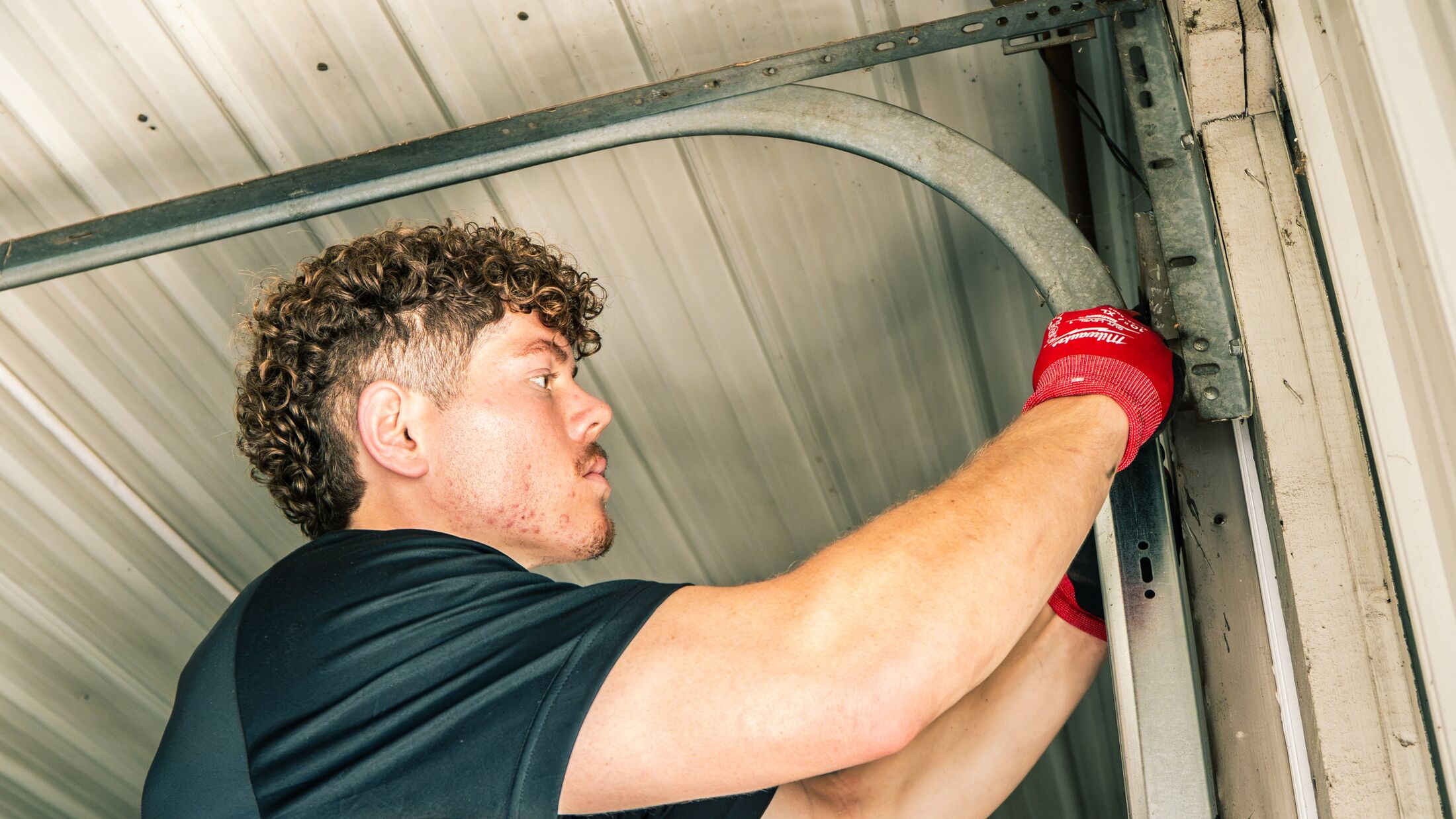
An off-track garage door is one of those problems that looks dramatic and is — but it's also a routine, same-day fix once the right person is on site. The danger isn't the repair. It's the door sitting there crooked under tension while someone decides to "just push it back up." Here's what actually happened, why you need to leave it alone, and how we get it riding straight again.
Why a door jumps the track
The track doesn't fail on its own. Something upstream pushes the door out of line, and the rollers pop out of the rail. The usual culprits:
- A snapped lift cable. When a cable lets go, that side of the door drops, the door racks at an angle, and the rollers walk right out of the track.
- Worn or broken rollers. A roller with a flat spot or a seized bearing wanders out of the rail instead of riding it. Old steel rollers are the common offender.
- An impact. A bumper tap, a kid's basketball hoop, a ladder leaned wrong — a solid knock can shove the bottom section off its rail.
- A broken spring. A snapped spring throws the whole door out of balance, and that uneven weight is enough to torque it off the track.
- Something in the track. A bolt head, a bent rail, or debris wedged in the channel stops a roller and the door climbs out around it.
Stop using it now
The most important thing you can do is nothing. Don't run the opener and don't try to force the door up or down by hand. Every cycle drags an already-crooked door further out of line — it can crush a panel, snap the other cable, or come down hard. A door you leave parked is a quick fix. A door someone kept fighting is a bigger one.
Why re-seating it yourself is dangerous
The instinct is to grab the door and lever it back into the rail. The problem is that an off-track door is almost always still loaded — spring tension overhead, cable tension on the drums — and prying on it can release that energy all at once. That's how people get a door dropped on them or a cable whipped across a hand. The track is bent metal under load, not a stuck drawer. This is firmly in the "call a technician" column, right next to spring work.
How we re-seat and repair it
The technician first figures out what threw the door off, because re-seating it without fixing the cause just buys you a few cycles before it jumps again. From there:
- Secure the door and relieve the spring and cable tension so nothing is loaded while we work.
- Free the rollers, straighten or replace any bent section of track, and clear whatever was in the channel.
- Re-seat the rollers in the rail and re-tension the cables evenly on both drums so the door hangs square.
- Replace worn rollers — standard steel rollers, or an upgrade to nylon rollers that run noticeably quieter and last longer with sealed bearings.
- Re-balance the door, cycle-test it under the opener, and walk you through what we found and fixed.
If the root cause was a cable or spring, we handle that in the same visit — there's no point re-seating a door onto a system that's about to fail again.
What it costs
We give you a free, up-front quote on site once we've found why the door jumped the track. Re-seating and roller replacement is priced by the job, and if the cause was a cable or spring, that's its own line — you get every number before any work begins.
Want to know exactly what's safe to do while you wait? Our guide on off-track garage door safety covers what to do and, more importantly, what not to attempt.
Steel vs. nylon rollers
Since the rollers are usually involved either as a cause or a casualty, it's worth knowing the two kinds. Steel rollers are what most builders install — durable and cheap, but they run on exposed bearings that wear, rust, and get loud as they age. A worn steel roller develops a flat spot or a sticky bearing and starts hunting its way out of the rail, which is how a lot of doors end up off-track in the first place. Nylon rollers cost a little more and run on sealed bearings, so they glide quieter, shed grit better, and last noticeably longer. If your door is loud and the rollers are original, the off-track repair is the natural time to upgrade — you're already paying to have the door apart.
Catch it before it jumps
A door rarely leaps off the track without warning. It grinds, it hops in one spot, a roller squeals, or the door looks slightly cocked when it's down. Those are the same symptoms a tune-up catches — worn rollers flagged, a fraying cable replaced, a tired spring spotted before it throws the door out of balance. We're owner-operated out of Wyoming and trusted by neighbors across the metro; if your door has been making new noises, it's cheaper to look now than to re-seat it after it jumps.
Off-track door questions
How much does it cost to fix an off-track garage door?
A technician comes out, finds why the door jumped the track, and gives you a free, up-front quote. Re-seating the door and replacing worn rollers is priced by the job; if the cause was a snapped cable or broken spring, that's its own line and we'll show you the number before we start.
Can I use my garage door if it came off the track?
No. Stop using it the moment you see it. Running the opener on an off-track door drags it harder out of alignment, can crush a panel, snap a cable, or pull the whole door down. Leave it exactly where it is, don't yank on it, and don't run the opener — a parked door is a fixable door.
Why did my garage door come off the track?
Usually one of five things: a snapped lift cable that let one side drop, a worn or broken roller that wandered out of the rail, an impact like a bumper tap, a broken spring throwing the door out of balance, or something jammed in the track. The track itself rarely 'goes bad' on its own — it's almost always one of those upstream failures pushing the door out of line.
Can I put the garage door back on the track myself?
We strongly advise against it. An off-track door is usually still under spring and cable tension, and that's where people get hurt — the door can drop or whip a cable when you pry on it. A technician relieves the tension, re-seats the rollers, and checks the part that caused it. It's a safe 30–60 minute job for someone with the right tools, and a trip to the ER for someone without.
Should I replace the rollers while the door is off the track?
If the rollers are worn, yes — a bad roller is often what let the door jump in the first place, and replacing them while everything is already apart is the cheapest time to do it. We can install standard steel rollers or upgrade you to quieter nylon rollers that run smoother and last longer. We'll tell you which yours need.