Guide · Noisy Doors
Why is my garage door
so loud?
A garage door talks. Grinding, squealing, rattling, popping, and banging each point at a different part. Here's how to read the noise, what's safe to quiet yourself, and the one sound that means stop and call.
After-hours calls · no extra fee
Door broken? Call us.
The common parts ride with us, so most jobs are one visit. You get the price before anything starts. No extra fee at night or on the weekend.
We aim for same-day when we're not booked out.
Garage doors are mechanical, so a little sound is normal. But a door that suddenly got louder is telling you something has changed — a part dried out, a bolt worked loose, or something is failing. The good news: a lot of the noise is cheap to fix yourself with a can of WD-40. The trick is knowing which sounds are routine and which mean you should stop using the door.
Squeaking or squealing — almost always dry parts
This is the most common complaint and the easiest fix. A high, dry squeal as the door moves is usually the hinges and rollers running metal-on-metal because the old lubricant has worn off. Hit the hinge pivots, the roller stems, the spring coils, and the bearings on the torsion bar with WD-40, wipe the excess, and cycle the door a few times to work it in.
Why we use WD-40
Most garage-door guides tell you to skip WD-40 and use a white lithium or silicone grease. Grease does hold up longer. It also collects dust and grit, and after a season or two the rollers are dragging through it. We'd rather use something thin and do it two or three times a year, so nothing packs up in the hinges. Either way, keep it off the track.
Rattling or clattering — loose hardware
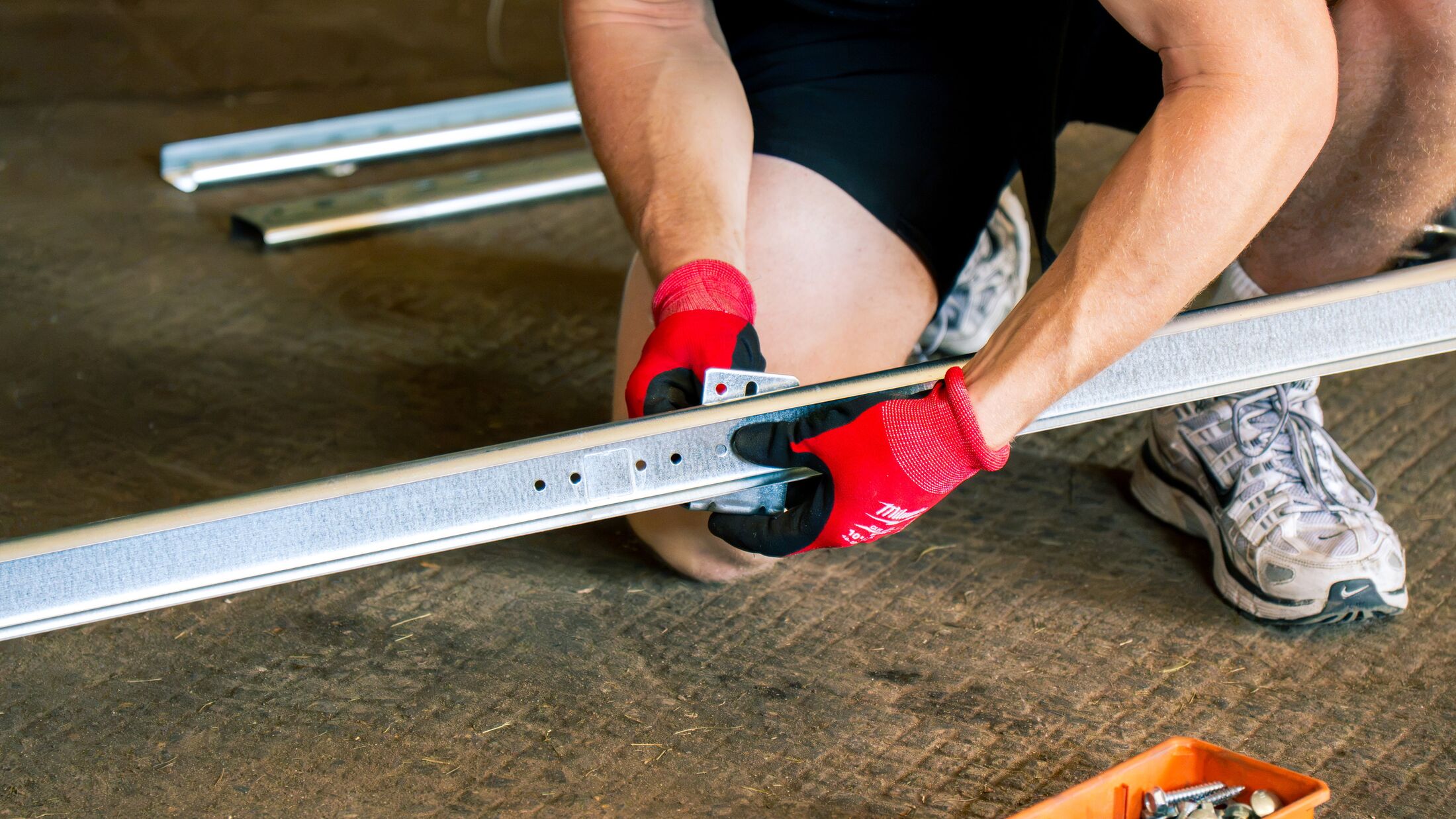
Years of opening and closing vibrate every bolt on the door. If it sounds like the whole door is shaking itself apart, walk it down with a socket and snug the nuts and bolts on the hinges, the track brackets, and the opener rail mounts. Tighten to firm — not cranked past the point of stripping the thread. One caution: leave the bottom-bracket bolts alone. Those anchor the lift cables and are under full spring tension; loosening them can send the bracket flying.
Grinding — worn rollers, or a stripped opener gear
Grinding comes in two flavors, and where it's coming from tells you which. A grind from along the tracks as the door rolls usually means dry or worn-out rollers, or dry bearings — old steel rollers can flat-spot and chew at the track. New nylon rollers run quiet and smooth. A grind coming from the opener head on the ceiling, often with the motor running but the door barely moving, is usually a stripped nylon drive gear inside the opener. That's a common wear part. We cover that fix under garage door opener repair.
Popping or banging — sections binding, or a spring let go
A rhythmic pop or snap as the door rounds the curve in the track usually means the sections are binding — the door is slightly out of alignment, or the torsion bar is dry and the sections are flexing against each other as they take the load. A shot of lube on the bearings and hinges helps, but if it keeps popping the door likely needs alignment.
The sound to take seriously is a single, sharp BANG — loud enough that people mistake it for a gunshot — often with nobody touching the door. That's almost always a torsion spring snapping under tension. After it, the door will be dead-weight heavy: it won't lift, or the opener will struggle up a few inches and quit.
One loud bang = check for a broken spring
If you heard a single loud bang and now the door won't open or feels impossibly heavy, don't keep hitting the opener — it'll cook its gears dragging an uncounterbalanced door. Leave the door down. This is the one job we tell homeowners never to touch themselves: springs store enough energy to break bones. See broken spring replacement for what the fix looks like (free, up-front quote, springs on the truck).
The quiet-it-yourself routine
For ordinary squeaks and rattles, fifteen minutes once or twice a year keeps a door quiet: wipe down the tracks (don't grease the inside of the track — that just collects grit), lubricate the hinges, rollers, springs, and bearings with WD-40, and snug any loose hardware. Doing this on a schedule also catches small problems before they turn into breakdowns — it's the core of a good maintenance routine, and we lay out the full home-owner checklist in how often to service a garage door.
When the noise means call
Lube and tighten the easy stuff. But grinding from the opener head, popping that won't quit after lubrication, or any single loud bang are past the DIY line. Those point at a stripped gear, a door out of alignment, or a broken spring — all of which get worse, and two of which are genuinely dangerous to work on. If your door is making a sound you can't place, that's a free estimate at your door, and we carry the common parts on the truck to fix it the same visit.
Noisy garage door questions
What can I safely lubricate to quiet a garage door?
Hinges, rollers (the stems, not the nylon wheels), the torsion bar bearings, and the springs themselves. We use WD-40 on ours. Most guides will tell you to use a white lithium or silicone garage-door grease, and grease does last longer, but it collects dust and grit until the rollers are turning through a paste. Wipe off the excess, run the door a few times, and the squeal usually goes away.
Should I use WD-40 on my garage door?
We do, on the hinges and the roller stems. Most guides say to skip it and use a white lithium or silicone garage-door grease, and they are right that WD-40 is thinner and doesn't last as long. You'll be doing it two or three times a year instead of once. We still prefer it. Grease sits on the hardware and collects dust and grit, and after a season or two the rollers are dragging through it. Nothing packs up with a thin spray. Keep whatever you use off the track, which is just the surface the rollers run on.
Is a noisy garage door dangerous?
Most noises are just dry parts or loose hardware and are easy to quiet. But grinding from the opener head, popping as sections move, or any single loud bang are warnings — they can mean a stripped opener gear, a binding door, or a broken spring. Those are not DIY fixes; stop using the door and have it checked.
What does a single loud bang from the garage mean?
A sharp, single bang — often when nobody touched the door — is the classic sound of a torsion spring snapping. After it, the door will usually be too heavy to lift or will only rise a few inches. Don't run the opener. We give you a free, up-front quote on a spring replacement.
Can tightening the hardware myself stop the rattling?
Yes — rattling and clattering are usually loose nuts, bolts, and track brackets working free from years of vibration. Snug them with a socket or wrench (don't crank them past tight). What you should NOT touch is anything on the spring system, the bottom-bracket bolts, or the cables — those are under load.
Need a garage door fix?
Tap to call.
We aim for same-day when we're not booked out. Tap-to-call gets you a real local person — no pushy sales scripts, no overseas call center.
4.9★ on Google · 92 reviews · Insured
You hear the price before any work. No extra fee nights or weekends.
Can't talk right now?
Leave your name and number and we'll call you.