Guide · Spring Life
How long do garage door springs last?
Cycles, not years.
The honest answer isn't a number of years — it's a number of cycles. Here's how to translate the cycle rating into real lifespan for your door, what burns through a spring early, and how to tell when yours is close to done.
After-hours calls · no extra fee
Door broken? Call us.
The common parts ride with us, so most jobs are one visit. You get the price before anything starts. No extra fee at night or on the weekend.
We aim for same-day when we're not booked out.
Almost everyone asks how many years a garage door spring lasts. That's the wrong unit. A spring doesn't wear out by the calendar — it wears out by use. The right unit is the cycle, and once you think in cycles, the lifespan stops being a mystery and becomes simple arithmetic you can do for your own door.
What a "cycle" actually means
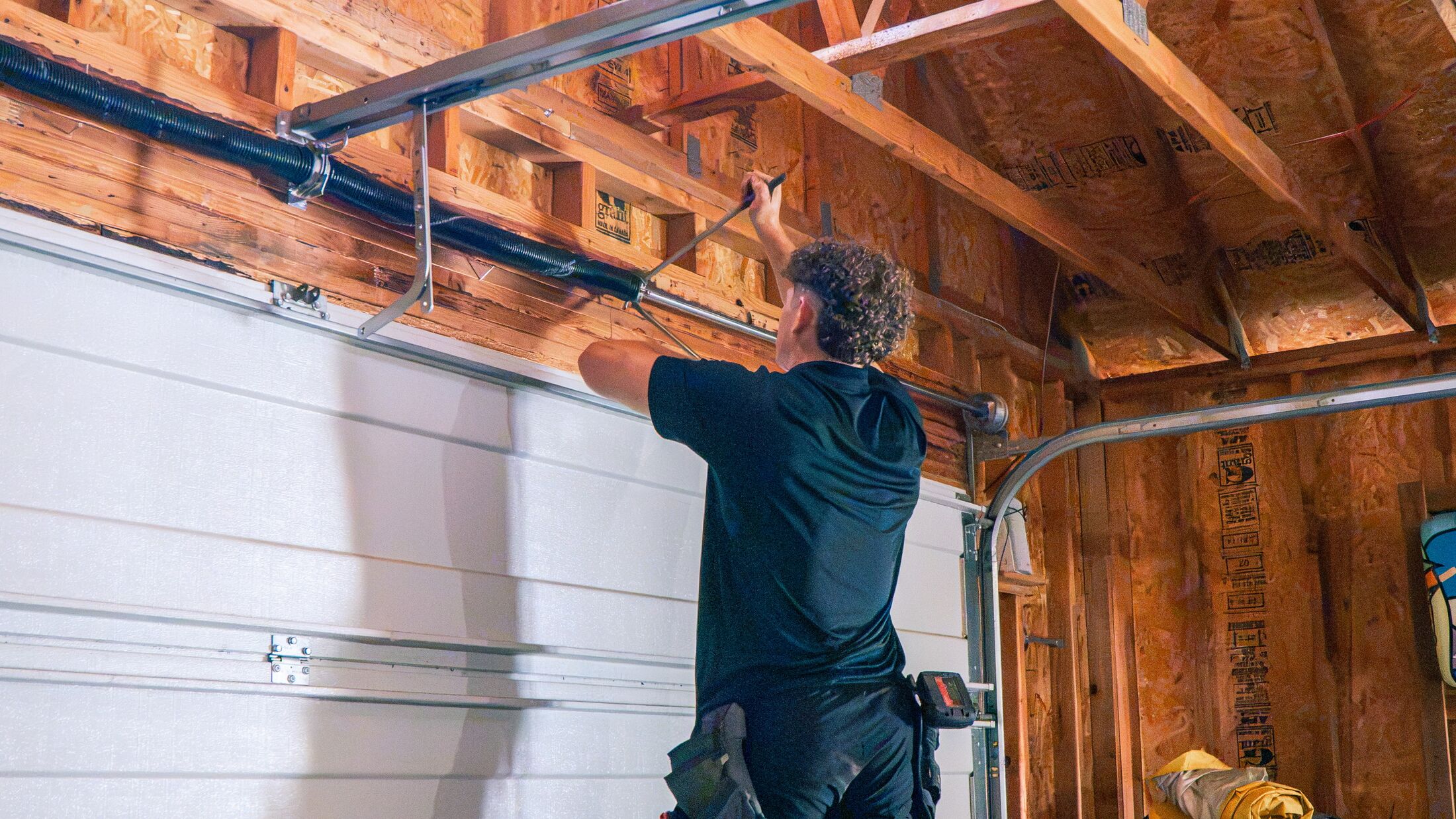
One cycle is one full open and one full close. Raising the door to grab the lawn mower and lowering it again is one cycle. Leave in the morning and come home at night and you've spent two. A torsion spring stores energy when the door is down and releases it as the door rises, and every one of those wind-and-unwind cycles flexes the steel a little. Metal fatigue is cumulative, so the spring is essentially counting down a fixed number of flexes from the day it's installed.
The standard builder spring: about 10,000 cycles
The spring most production builders hang on a new home is rated around 10,000 cycles. That sounds like a lot until you do the math against real life:
| How you use the door | Cycles / year | ~10,000-cycle spring lasts |
|---|---|---|
| Light — a few trips a week | ~300–500 | 20+ years |
| Average — 4 open/close a day | ~1,460 | ~7 years |
| Busy — 6–8 a day (kids, side entry) | ~2,500 | ~4 years |
| Heavy — 10+ a day, main entrance | ~3,650 | ~3 years |
That's why two neighbors with identical doors can have wildly different experiences. The family that uses the garage as their front door is on a four-year clock; the couple who parks in the driveway and only opens it for yard work might never replace a spring. The rating didn't change — the usage did.
What shortens spring life
Cycle count is the biggest factor, but a handful of things make a spring give out before its rated number:
- Cold and rust. Steel gets more brittle in the cold, and the freeze-thaw swings off Lake Michigan put extra stress on a spring that's already worn. Surface rust from a damp, unheated garage adds friction and micro-cracks that bring the failure point forward. This is why so many springs let go on the first hard freeze of the season.
- Undersized builder springs. To save a few dollars per house, builders sometimes hang a spring that's barely matched to the door's weight. It works harder on every cycle and fatigues faster than a properly sized spring would.
- High daily cycles. Covered above, but worth repeating — it's the single thing that moves the needle most.
- Poor lubrication. A dry spring binds against itself and the bar. A few minutes with a can of WD-40 two or three times a year genuinely extends life.
- An unbalanced door. If the rollers, hinges, or track are dragging, the spring is counterbalancing more resistance than it was sized for, every single cycle. A door that's out of balance eats springs.
The lubrication is free; the spring isn't
The cheapest way to stretch a spring's life is the part most people skip: keep it clean and lubricated, and keep the door in balance. A tune-up that catches a dragging roller or a dry spring is a lot cheaper than the spring replacement a neglected door buys you years early. Our maintenance tune-up exists for exactly this.
Lifetime and high-cycle springs
If 10,000 cycles isn't enough for how you live, you can step up. "Lifetime" or high-cycle springs are rated around 25,000 to 30,000 cycles and up — roughly two to three times a standard spring. On that average four-a-day door, a 25,000-cycle spring is pushing seventeen years; on a busy main-entrance door it can be the difference between replacing a spring every few years and replacing it once. The upgrade costs more up front, and it isn't right for every house. We lay out exactly when it pays off in are lifetime garage door springs worth it.
How to estimate the life left in your spring
You can do a rough version yourself. Count how many times your door opens and closes on a normal day, multiply by 365, and you have your cycles per year. Divide the spring's rating by that number for an estimated lifespan. If you don't know the rating, assume 10,000 for a builder spring. Then watch for the warning signs that override any math: visible gaps in the coil, rust streaks, a door that suddenly feels heavy by hand, or a door that won't stay put halfway up. Those mean the spring is near the end no matter what the calculator says — and on a two-spring door, when one is done its twin is usually weeks behind. If yours has already let go, here's what to do about a broken spring across the Grand Rapids metro: leave the door down, stop using the opener, and have full-size springs brought to you for a one-visit fix with a free, up-front quote.
We cover the whole metro, including spring replacement in Grand Rapids, Walker, Hudsonville, and Jenison.
Spring lifespan questions
How many years does a garage door spring last?
There's no fixed number of years — springs are rated in cycles, not time. A standard ~10,000-cycle spring on a door opened four times a day lasts roughly seven years. Open it ten times a day and it's closer to three. A door used only a couple times a week can go fifteen-plus years on the same spring.
What is a garage door spring cycle?
One cycle is one full open and one close. So pulling in and pulling out later in the day is two cycles, not one. The cycle rating stamped or quoted on a spring is how many of those open-close pairs it's built to survive before metal fatigue catches up.
What makes a garage door spring wear out faster?
High daily cycle counts are the big one. After that: undersized builder springs that work too hard for the door's weight, cold and rust (West Michigan winters are hard on steel), no lubrication, and a door that's out of balance so the spring is fighting more weight than it should.
Are lifetime garage door springs really better?
So-called lifetime or high-cycle springs are rated around 25,000–30,000 cycles or more — roughly two to three times a standard spring. They cost more up front, but on a door you'll keep and use daily they often outlast a couple of standard replacements. We break the math down in our higher-cycle springs guide.
How can I tell how much life my spring has left?
You can't read it exactly, but you can estimate. Find out the spring's cycle rating (a tech can tell you), then multiply your daily open-close count by 365 to get cycles per year. Divide the rating by that and you have a rough lifespan. Any rust, gaps, or a door that suddenly feels heavy means you're near the end regardless of the math.
Need a garage door fix?
Tap to call.
We aim for same-day when we're not booked out. Tap-to-call gets you a real local person — no pushy sales scripts, no overseas call center.
4.9★ on Google · 92 reviews · Insured
You hear the price before any work. No extra fee nights or weekends.
Can't talk right now?
Leave your name and number and we'll call you.