How do I open my garage door during a power outage?
West Michigan storm season knocks out power more than people plan for, and a dead opener can strand a car inside. Every garage door has a manual release built in for exactly this. Here's how to use it safely, what a properly balanced door should feel like, and what to check once the power's back.
4.9 from 111 Google reviews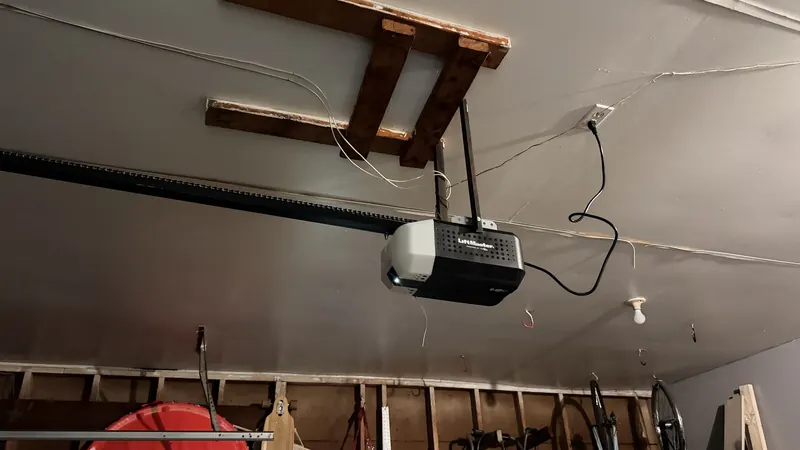
A summer storm knocks the power out and suddenly the car that needs to leave in ten minutes is sealed behind a garage door that won't respond to the remote or the wall button. Every garage door opener has a manual release built in for exactly this situation. Here's how to use it, what a healthy door should feel like once it's disengaged, and how to tell when the outage isn't the real problem.
Find the manual release cord
Look up at the opener's rail, the metal track running from the motor unit to the top of the door. A short rope with a handle, usually red, hangs down from the trolley, the piece that rides along the rail and connects to the door itself. That cord is the manual release. Pulling it disconnects the trolley from the drive mechanism inside the opener, which frees the door to move independently of the motor, with no power required.
Pull the cord straight down, or toward the opener at roughly a 45-degree angle on some models (check the sticker near the release if there is one). You'll usually feel or hear a small click as the trolley disengages.
Lift the door by hand
Once it's released, grip the door's handles (not the panel edges) and lift with a smooth, even motion, ideally from the center or both sides at once rather than one corner. A garage door is counterbalanced by its springs, so a properly working door should lift with surprisingly little effort and tend to stay in place, or nearly so, partway up rather than crashing back down.
Securing the garage while it's manually released
With the opener disconnected, the remote and keypad won't lock the door the way they normally do. Many doors have a keyed exterior lock or a slide lock built into the track specifically for this. Check for one before assuming the garage is open to anyone during the outage. If there isn't one and the outage runs long, a temporary lock through the track just above a roller (a padlock or C-clamp, positioned so it can't be reached from outside) keeps the door from being lifted while you're away from it.
Reconnecting once the power's back
Leaving the door fully closed when you're done makes reconnecting simplest, because the trolley re-engages cleanly with the door already seated. Once power is restored, run the opener through a full open-and-close cycle before trusting it with normal use, and confirm the auto-reverse safety feature still works (the door should back off if it meets resistance or the sensor beam is broken while closing). If it doesn't reconnect smoothly or the opener seems to be running but not moving the door, the trolley may not have re-latched. Pull the release cord and try reseating it rather than repeatedly hitting the button.
When it isn't just the outage
A dead opener during a power outage is expected. That's the whole reason the manual release exists. What isn't expected is a door that's heavy, uneven, or won't hold its position once it's disengaged. That's a spring or cable issue that happened to surface the moment you needed the door most, and the outage didn't cause it. The same goes for a release cord that won't budge or a trolley that won't reconnect once power is back. Both are signs something underneath needs a look. We're out seven days a week for garage door repair, with a free estimate and same day service in the Grand Rapids area.
Garage door repair
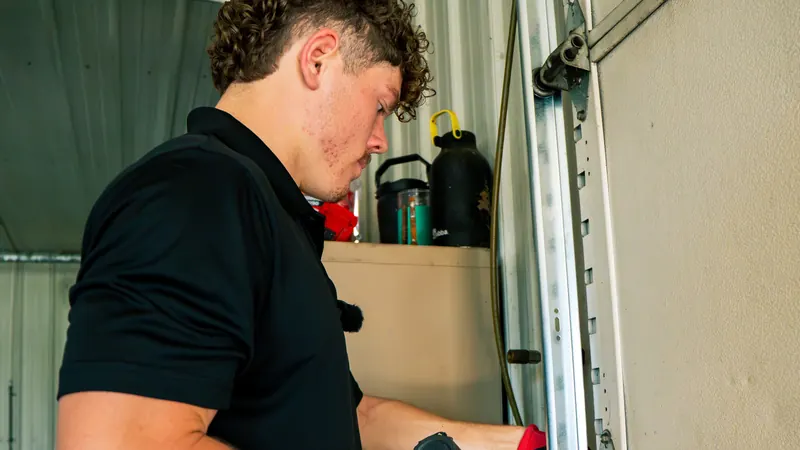
Stuck, crooked, loud, or won't close all the way. We find what's wrong and fix it, most of the time in one visit.
Power outage questions
How do I open my garage door if the power is out?
Look for the manual release cord hanging from the opener's trolley, usually a red handle on a rope. Pulling it straight down (or toward the opener, on some models) disconnects the door from the opener carriage, and once it's released you lift the door by hand using the handles. Lift evenly from the center or both sides, not from one corner.
Is it safe to lift a garage door by hand?
For a properly balanced door, yes. A garage door is spring-counterbalanced, so once released it should lift with light, even effort and stay open on its own partway up. If it feels heavy, uneven, or doesn't hold its position and starts to drift back down, stop. That points to a weak or broken spring, so don't force it by hand.
Can I lock my garage door manually during an outage?
Most doors have a keyed exterior lock or slide lock built into the track for exactly this situation. Check for one before assuming the garage is unsecured with the opener offline. If you don't have one and you're leaving the door manually disengaged for a while, a temporary interior lock (like a C-clamp or padlock through the track just above a roller) keeps it from being lifted from outside.
Do I need to do anything before the power comes back on?
Not necessarily, but leave the door in a position where the opener's trolley can re-engage cleanly. Fully closed is simplest. When power returns, run the opener through a full open-and-close cycle and confirm it reconnects to the door properly and the safety reversal (the door backing off when it meets resistance) is still working before using it normally.
Does a garage door opener have a battery backup?
Some do. Many openers made in the last several years include a battery backup that keeps the opener itself running through an outage for a limited number of cycles, though it's not universal on older units. If you don't know whether yours has one, the manual release cord works regardless and is the reliable fallback every opener has.
More garage door guides
Garage door cable frayed or loose? What it means
What a frayed, slack, or off-the-drum cable means, why to stop using the door, and what a repair involves.
Crooked or sagging doorGarage door crooked or sagging on one side?
Why one side hangs lower, what's safe to look at, and why you shouldn't run a crooked door.
Won't close all the wayGarage door won't close all the way (or reverses back up)?
When a door closes then pops back up, it's usually the photo-eye sensors or a limit setting.
Free estimates. No after-hours fee.
4.9 from 111 Google reviewsSame day service. You hear the price before any work begins.